Showing posts with label Saints. Show all posts

Friday, September 16, 2016

Saint Cyprian of Carthage on the Lord's Prayer

Patristic commentaries on the Lord's Prayer were some of my favorite readings during my patrology course last year. St. Cyprian, who is commemorated today with fellow martyr Pope St. Cornelius, was not the first to compose such a commentary but his has been one of the most influential. Here are some selections from the work:

Before all things, the Teacher of peace and the Master of unity would not have prayer made singly and individually, as for one who prays to pray for himself alone. For we do not say “My Father, which art in heaven,” nor “Give me this day my daily bread;” nor does each ask that only his own debt should be forgiven; nor does he request for himself alone that he may not be led into temptation and delivered from evil. Our prayer is public and common, and when we pray, we pray not for one, but for the whole people, because we the whole people are one. The God of peace and the Teacher of concord, who taught unity, willed that one should thus pray for all, even as He Himself bore us all in one.

But what matters of great import are contained in the Lord’s prayer! How many and how great, briefly collected in the words, but spiritually abundant in virtue so that there is absolutely nothing passed over that is not encompassed in these prayers and petitions, as in a compendium of heavenly doctrine. “Pray ye thus,” He says: "Our Father, which art in heaven.” The new man, born again and restored to God by His grace, says “Father,” in the first place because he has now begun to be a son. But how great is the Lord’s indulgence and goodness towards us, seeing that He has wished us to pray in such a way as to call God Father, and to call ourselves sons of God, even as Christ is the Son of God,—a name which none of us would dare to venture on in prayer, unless He Himself had allowed us thus to pray! We ought then, beloved brethren, to remember and to know, that when we call God Father, we ought to act as God’s children; so that in the measure in which we find pleasure in considering God as a Father, He might also be able to find pleasure in us.

After this we say, “Hallowed be Thy name;” not that we wish God may be hallowed by our prayers, but that we beg that His name may be hallowed in us. Because He says, “Be ye holy, even as I am holy,” we ask and entreat, that we who were sanctified in baptism may continue as that which we have begun to be. And this we daily pray for; for we have need of daily sanctification, that we who daily fall away may wash out our sins by continual sanctification.

There follows in the prayer, "Thy kingdom come." We ask that the kingdom of God may be set forth to us, even as we also ask that His name may be sanctified in us. For when does God not reign, or when does that which always has been and never ceases to be begin with Him? We pray that our kingdom may come, which was acquired by the blood and passion of Christ; that we who first are His subjects in the world, may hereafter reign with Christ when He reigns, as He Himself promises and says, “Come, ye blessed of my Father, receive the kingdom which has been prepared for you from the beginning of the world.”

We add, also, and say, “Thy will be done, as in heaven so in earth;” not that God should do what He wills, but that we may be able to do what God wills. For who resists God, that He may not do what He wills? But since we are hindered by the devil from obeying with our thought and deed God’s will, we pray and ask that God’s will may be done in us; and that it may be done in us we have need of God’s good will, that is, of His help and protection, since no one is strong in his own strength, but he is safe by the grace and mercy of God.

As the prayer goes forward, we ask and say, “Give us this day our daily bread.” And this may be understood both spiritually and literally, because either way of understanding it is rich in divine usefulness to our salvation.  For Christ is the bread of life; and this bread does not belong to all men, but it is ours. And just as we say, “Our Father,” because He is the Father of those who believe, so also we call it “our bread,” because Christ is the bread of those who are in union with His body. And therefore we ask that our bread—that is, Christ—may be given to us daily, that we who abide and live in Christ may not depart from His sanctification and body.

After this we also entreat for our sins, saying, “And forgive us our debts, as we also forgive our debtors.” The Lord calls sins debts, as He says in His Gospel, “I forgave thee all that debt, because thou desired me.” Lest any one should flatter himself that he is innocent, and by exalting himself should more deeply perish, he is taught that he sins daily by being bidden to entreat daily for his sins. Thus, John also in his epistle warns us, and says, “If we say that we have no sin, we deceive ourselves, and the truth is not in us; but if we confess our sins, the Lord is faithful and just to forgive us our sins.” He who taught us to pray for our debts and sins, has promised that His fatherly mercy and pardon shall follow. He has here clearly added the law and bound us by a certain condition, that we should ask that our debts be forgiven us in such a manner as we ourselves forgive our debtors, knowing that that which we seek for our sins cannot be obtained unless we ourselves have acted in a similar way in respect of our debtors. Therefore also He says in another place, “With what measure ye mete, it shall be measured to you again.” And the servant who, after having had all his debt forgiven him by his master, would not forgive his fellow-servant, is cast back into prison; because he would not forgive his fellow-servant, he lost the indulgence that had been shown to himself by his lord. “When ye stand praying,” He says, “forgive if ye have aught against any, that your Father which is in heaven may forgive you your trespasses. But if ye do not forgive, neither will your Father which is in heaven forgive you your trespasses.”

Moreover, the Lord of necessity admonishes us to say in prayer, “And suffer us not to be led into temptation.” In which words it is shown that the adversary can do nothing against us except what God shall have previously permitted; so that all our fear, and devotion, and obedience may be turned towards God, since in our temptations nothing is permitted to evil unless power is given from Him.

After all these things, in the conclusion of the prayer comes a brief clause which briefly and comprehensively sums up all our petitions and our prayers. For we conclude by saying, “But deliver us from evil,” encompassing all adverse things which the enemy attempts against us in this world, from which there may be a faithful and sure protection if God deliver us. For when we say, "Deliver us from evil," there remains nothing further which ought to be asked. When we have once asked for God’s protection against evil, and have obtained it, then against everything which the devil and the world work against us we stand secure and safe. For what fear is there in this life, to the man whose guardian in this life is God?

What wonder is it, beloved brethren, if such is the prayer which God taught, seeing that He condensed in His teaching all our prayer in one saving sentence? For when the Word of God, our Lord Jesus Christ, came unto all, and gathering alike the learned and unlearned, published to every sex and every age the precepts of salvation, He made a large compendium of His precepts, that the memory of the scholars might not be burdened in the celestial learning, but might quickly learn what was necessary to a simple faith.

Cyprian of Carthage (d.258): On the Lord's Prayer (Excerpts)


Monday, April 4, 2016

Saint Leo the Great on the Incarnation

The Solemnity of the Annunciation is observed today, transferred from 25 March because of Good Friday. The second reading of Matins today is from Pope St. Leo the Great. Reading some of his writings for patrology last semester, I gained an appreciation for the style in which he expresses the dogmas of the incarnation and hypostatic union with great clarity within his theological subtlety, an art I am gaining appreciation for as I struggle to write papers and exams on the Trinity this semester. 


Second reading
From a letter by Saint Leo the Great, pope
The mystery of man’s reconciliation with God

Lowliness is assured by majesty, weakness by power, mortality by eternity. To pay the debt of our sinful state, a nature that was incapable of suffering was joined to one that could suffer. Thus, in keeping with the healing that we needed, one and the same mediator between God and men, the man Jesus Christ, was able to die in one nature, and unable to die in the other.

He who is true God was therefore born in the complete and perfect nature of a true man, whole in his own nature, whole in ours. By our nature we mean what the Creator had fashioned in us from the beginning, and took to himself in order to restore it.

For in the Savior there was no trace of what the deceiver introduced and man, being misled, allowed to enter. It does not follow that because he submitted to sharing in our human weakness he therefore shared in our sins.

He took the nature of a servant without stain of sin, enlarging our humanity without diminishing his divinity. He emptied himself; though invisible he made himself visible, though Creator and Lord of all things he chose to be one of us mortal men. Yet this was the condescension of compassion, not the loss of omnipotence. So he who in the nature of God had created man, became in the nature of a servant, man himself.

Thus the Son of God enters this lowly world. He comes down from the throne of heaven, yet does not separate himself from the Father’s glory. He is born in a new condition, by a new birth.

He was born in a new condition, for, invisible in his own nature, he became visible in ours. Beyond our grasp, he chose to come within our grasp. Existing before time began, he began to exist at a moment in time. Lord of the universe, he hid his infinite glory and took the nature of a servant. Incapable of suffering as God, he did not refuse to be a man, capable of suffering. Immortal, he chose to be subject to the laws of death.

He who is true God is also true man. There is no falsehood in this unity as long as the lowliness of man and the pre-eminence of God coexist in mutual relationship.

As God does not change by his condescension, so man is not swallowed up by being exalted. Each nature exercises its own activity, in communion with the other. The Word does what is proper to the Word, the flesh fulfills what is proper to the flesh.

One nature is resplendent with miracles, the other falls victim to injuries. As the Word does not lose equality with the Father’s glory, so the flesh does not leave behind the nature of our race.

One and the same person — this must be said over and over again — is truly the Son of God and truly the son of man. He is God in virtue of the fact that in the beginning was the Word, and the Word was with God, and the Word was God. He is man in virtue of the fact that the Word was made flesh, and dwelt among us.

Saturday, March 19, 2016

Saint Joseph, the Just Man

I was assigned to write a post for the Oblate seminarians' blog this week, so I took the opportunity to explain a little of what the Solemnity of St. Joseph means to us.

This weekend we celebrate the Solemnity of St. Joseph, Spouse of Mary and Patron of the Universal Church. It is an important day for Oblates of the Virgin Mary, and not just because of zeppole and cannoli; St. Joseph is the patron of our Congregation.

In the late 19th century, there was an entire decade when the Oblates had no new vocations. After struggling through tumultuous times during the foundation and early years of the Congregation, the relative political stability following the unification of Italy in 1870 brought little peace. The Church was under attack from the modernist movement that caused many to question the relevance of faith and morals and even reject them outright, and Pope Pius IX responded by naming St. Joseph, the protector of the Holy Family, Patron of the Universal Church in 1870. At the same time, the Oblates of the Virgin Mary also named St. Joseph patron and began asking his intercession for vocations. There was much doubt; after enduring 40 years of struggle and abuse at the hands of political authorities and socially influential figures, was the Oblate mission over? Was God doing something new at a time when it seemed the charism was needed more than ever? Well, St. Joseph came through and the rest is history.

As our Patron, St. Joseph is an important intercessor, but also a model of virtue. He is a man of obedience: he listened to what was spoken to him by God and acted accordingly (Matthew 1:24, 2:14, 2:21). In this St. Joseph is a model especially for us men in formation, when it is crucial to learn to listen to the voice of God in different ways- through spiritual movements, the discernment of superiors, the circumstances of community life- and to freely embrace his will.

I have personally experienced the important role of St. Joseph’s humble obedience in our Congregation’s works of accompaniment in spiritual direction and retreat ministry, both important for many people who are discerning the will of God in their lives. This ministry requires much preparation in spiritual and intellectual formation, which can seem like an endless uphill climb. But St. Joseph was a man of obedience before action. He is the Just Man because he sacrificed to God what was his due- the mind and heart that God has given to men for the custody of others. It is good for me to be reminded that before anything I study, practice, or preach, the only good I can really do for others is what God asks of me in ordinary daily life.

Tuesday, March 1, 2016

Saint Peter Chrysologus on Mercy in Lent


The Office of Readings today has a gem from St. Peter Chrysologus that explains the spirit of lenten observances very lucidly.

If you hope for mercy, show mercy. If you look for kindness, show kindness. If you want to receive, give. If you ask for yourself what you deny to others, your asking is a mockery.

As Laetare Sunday approaches, I am glad to be reminded to be mindful and evaluate my lenten practices, especially in this jubilee year of mercy, and recall that forgiveness of injuries opens the wounded heart to receive forgiveness from God.


Second reading

From a sermon by Saint Peter Chrysologus, bishop
Prayer knocks, fasting obtains, mercy receives

There are three things, my brethren, by which faith stands firm, devotion remains constant, and virtue endures. They are prayer, fasting and mercy. Prayer knocks at the door, fasting obtains, mercy receives. Prayer, mercy and fasting: these three are one, and they give life to each other.

Fasting is the soul of prayer, mercy is the lifeblood of fasting. Let no one try to separate them; they cannot be separated. If you have only one of them or not all together, you have nothing. So if you pray, fast; if you fast, show mercy; if you want your petition to be heard, hear the petition of others. If you do not close your ear to others you open God’s ear to yourself.

When you fast, see the fasting of others. If you want God to know that you are hungry, know that another is hungry. If you hope for mercy, show mercy. If you look for kindness, show kindness. If you want to receive, give. If you ask for yourself what you deny to others, your asking is a mockery.

Let this be the pattern for all men when they practice mercy: show mercy to others in the same way, with the same generosity, with the same promptness, as you want others to show mercy to you.

Therefore, let prayer, mercy and fasting be one single plea to God on our behalf, one speech in our defense, a threefold united prayer in our favor.

Let us use fasting to make up for what we have lost by despising others. Let us offer our souls in sacrifice by means of fasting. There is nothing more pleasing that we can offer to God, as the psalmist said in prophecy: A sacrifice to God is a broken spirit; God does not despise a bruised and humbled heart.

Offer your soul to God, make him an oblation of your fasting, so that your soul may be a pure offering, a holy sacrifice, a living victim, remaining your own and at the same time made over to God. Whoever fails to give this to God will not be excused, for if you are to give him yourself you are never without the means of giving.

To make these acceptable, mercy must be added. Fasting bears no fruit unless it is watered by mercy. Fasting dries up when mercy dries up. Mercy is to fasting as rain is to the earth. However much you may cultivate your heart, clear the soil of your nature, root out vices, sow virtues, if you do not release the springs of mercy, your fasting will bear no fruit.

When you fast, if your mercy is thin your harvest will be thin; when you fast, what you pour out in mercy overflows into your barn. Therefore, do not lose by saving, but gather in by scattering. Give to the poor, and you give to yourself. You will not be allowed to keep what you have refused to give to others.

Sunday, February 7, 2016

Saint Gregory of Nyssa on Forgiveness

The forgiveness of debts is a unique and special prerogative of God.

It was said: “No one can forgive sins but God alone” (Mk 2:7).

A person obtains confidence in prayer by willingly imitating every conceivable attribute of God who is both kind and gentle, the source of all blessings and the dispenser of mercies to all.

It is not becoming that an evil person should enjoy intimacy with a good person, nor that a person who wallows in impure thoughts should have communion with one who is pure and undefiled.

In like manner, hardness of heart separates the supplicant from the love of God.

Whoever holds someone else in bitter bondage because of outstanding debts has by his own conduct excluded himself from divine love.

What communion can there be between love and cruelty, kindness and harshness, or any attribute and its opposite that is evil? Mutual opposition keeps them separated. For whoever is possessed by any particular attribute is necessarily estranged from its opposite.

Just as one who dies no longer lives, and the one who lives is estranged from death, so also he who approaches the love of God must necessarily be removed from every disposition of callousness.

Whoever is free of all those dispositions understood as being evil, he becomes in some way god by reason of his condition having achieved in himself what reason understands to be attributes of God.

Do you see to what greatness the Lord exalts those who hear Him through the words of the prayer? He transforms human nature in some way to be closer to the divine. He decrees that those who approach God should become gods.

Why do you come to God, He says, in a slavish manner, trembling in fear and plagued by your own conscience? Why do you exclude yourself from the confidence which coexists with the freedom of the soul from the beginning and which is intrinsic to the essence of your nature?

Why do you use flattery with Him who cannot be flattered? Why do you direct fawning and flattering words to the One who looks at deeds?

Every blessing that comes from God is permissible to you. You can possess it with a free spirit. Be your own judge. Cast the saving vote for yourself. Do you ask God to forgive your debts? Forgive the debts of others and God will cast his favorable ballot.

You yourself are the lord of judgment concerning your neighbor. This judgment, whatever it maybe, will bring an equal decision upon you. For whatever you decide to do, will be ratified by the divine judgment in your case, too.

Gregory of Nyssa (c 335 – c 394): Fifth homily on the Lord’s prayer.

Saturday, January 9, 2016

Saint Maximus of Turin on the Baptism of the Lord

From the Office of Readings

Second reading
From a sermon by Saint Maximus of Turin, bishop
The mystery of the Lord’s baptism

The Gospel tells us that the Lord went to the Jordan River to be baptized and that he wished to consecrate himself in the river by signs from heaven.

Reason demands that this feast of the Lord’s baptism, which I think could be called the feast of his birthday, should follow soon after the Lord’s birthday, during the same season, even though many years intervened between the two events. At Christmas he was born a man; today he is reborn sacramentally. Then he was born from the Virgin; today he is born in mystery. When he was born a man, his mother Mary held him close to her heart; when he is born in mystery, God the Father embraces him with his voice when he says: This is my beloved Son in whom I am well pleased: listen to him. The mother caresses the tender baby on her lap; the Father serves his Son by his loving testimony. The mother holds the child for the Magi to adore; the Father reveals that his Son is to be worshiped by all the nations.

That is why the Lord Jesus went to the river for baptism; that is why he wanted his holy body to be washed with Jordan’s water.

Someone might ask, “Why would a holy man desire baptism?” Listen to the answer: Christ is baptized, not to be made holy by the water, but to make the water holy, and by his cleansing to purify the waters which he touched. For the consecration of Christ involves a more significant consecration of the water.

For when the Savior is washed, all water for our baptism is made clean, purified at its source for the dispensing of baptismal grace to the people of future ages. Christ is the first to be baptized, then, so that Christians will follow after him with confidence.

I understand the mystery as this. The column of fire went before the sons of Israel through the Red Sea so they could follow on their brave journey; the column went first through the waters to prepare a path for those who followed. As the apostle Paul said, what was accomplished then was the mystery of baptism. Clearly it was baptism in a certain sense when the cloud was covering the people and bringing them through the water.

But Christ the Lord does all these things: in the column of fire he went through the sea before the sons of Israel; so now, in the column of his body, he goes through baptism before the Christian people. At the time of the Exodus the column provided light for the people who followed; now it gives light to the hearts of believers. Then it made a firm pathway through the waters; now it strengthens the footsteps of faith in the bath of baptism.

Saturday, January 24, 2015

Saint Francis de Sales on Sadness

I wanted to share another gem from Saint Francis de Sales from Introduction to the Devout Life. This excerpt gives advice for times of struggle with sadness and melancholy, the times when it is difficult to pray and to embrace the will of God and these become necessary as sacrifices. The principle that Saint Ignatius enshrined in his Exercises is apparent here- to work against the evil spirit and ignore the suggestive thoughts that arise in spiritual desolation.


The Evil One delights in sadness and melancholy, because they are his own characteristics.

He will be in sadness and sorrow through all Eternity, and he would fain have all others the same.

The “sorrow of the world” disturbs the heart, plunges it into anxiety, stirs up unreasonable fears, disgusts it with prayer, overwhelms and stupefies the brain, deprives the soul of wisdom, judgment, resolution and courage, weakening all its powers.

In a word, it is like a hard winter, blasting all the earth’s beauty, and numbing all animal life; for it deprives the soul of sweetness and power in every faculty.

Should you, my daughter, ever be attacked by this evil spirit of sadness, make use of the following remedies.

[…] Prayer is a sovereign remedy, it lifts the mind to God, Who is our only Joy and Consolation.

But when you pray let your words and affections, whether interior or exterior, all tend to love and trust in God.

“O God of Mercy, most Loving Lord, Sweet Saviour, Lord of my heart, my Joy, my Hope, my Beloved, my Bridegroom.”

Vigorously resist all tendencies to melancholy, and although all you do may seem to be done coldly, wearily and indifferently, do not give in.

The Enemy strives to make us languid in doing good by depression, but when he sees that we do not cease our efforts to work, and that those efforts become all the more earnest by reason of their being made in resistance to him, he leaves off troubling us.

Make use of hymns and spiritual songs; they have often frustrated the Evil One in his operations, as was the case when the evil spirit which possessed Saul was driven forth by music and psalmody.

It is well also to occupy yourself in external works, and that with as much variety as may lead us to divert the mind from the subject which oppresses it, and to cheer and kindle it, for depression generally makes us dry and cold.

[…] Moderate bodily discipline is useful in resisting depression, because it rouses the mind from dwelling on itself; and frequent Communion is specially valuable; the Bread of Life strengthens the heart and gladdens the spirits.

Lay bare all the feelings, thoughts and longings which are the result of your depression to your confessor or director, in all humility and faithfulness; seek the society of spiritually-minded people, and frequent such as far as possible while you are suffering.

And, finally, resign yourself into God’s Hands, endeavouring to bear this harassing depression patiently, as a just punishment for past idle mirth. Above all, never doubt but that, after He has tried you sufficiently, God will deliver you from the trial.

Francis de Sales (1567-1622): Introduction to the Devout Life, 4, 12.

Saint Francis de Sales: Act of Abandonment

To celebrate Saint Francis de Sales, a master of the spiritual life whose work I have come to appreciate more fully over the past couple of years, I would like to share his Act of Abandonment.

I love this prayer and return to it frequently because it not only addresses carrying the cross given to us, but embracing it and venerating it, approaching it with reverence because it has been given to us for our salvation. When I struggle with spiritual desolation and feel the weight, it is not 'being tough' and soldiering on that carries me through, but recalling that I am following Jesus in his great outpouring of love.


O my God, I thank you and I praise you 
for accomplishing your holy and all-lovable will 
without any regard for mine. 
With my whole heart, 
in spite of my heart, 
do I receive this cross I feared so much! 

It is the cross of Your choice, 
the cross of Your love. 
I venerate it; 
nor for anything in the world 
would I wish that it had not come, 
since You willed it. 

I keep it with gratitude and with joy, 
as I do everything that comes from Your hand; 
and I shall strive to carry it without letting it drag, 
with all the respect 
and all the affection which Your works deserve. 

Amen.


Sunday, January 18, 2015

Saint Aphrahat on Fasting


I know, I know; it is a little early to be anticipating Lent, but since I will be fasting as part of the Spiritual Exercises I am doing some reading to prepare, including a catechesis on fasting by Saint Aphrahat the Persian on various ways of fasting and mortifying the passions.

St. Ephrem, St. Isaac, St. Aphrahat

A pure fast is excellent before God and is guarded as a treasure in heaven. And it is a weapon against the evil one and a shield intercepting the arrows of the enemy (Ephesians 6:16). And I have not said this according to my way of thinking, but according to the Holy Books which have shown us beforehand that the fasting was a helper in all times for those who have fasted truly. For fasting, my beloved, was not only this abstaining from bread and water, but many are the observances of fasting.

For there is he who fasts from bread and water until he will hunger and thirst.

And there is he who fasts to remain in virginity, who hungers but does not eat; who thirsts but does not drink; and this fast is more excellent.

And for he who fasts in sexual abstinence, it is also fasting.

And there is he who fasts from flesh, wine and various foods.

And there is he who fasts to put up a barrier to his mouth so that he will not speak hateful words.

And there is he who fasts from anger and controls his inclination so that he is not vanquished.

And there is he who fasts from possessions so that he may empty himself for his work.

And there is he who fasts from various kinds of mattresses so that he will be vigilant in prayer.

And there is he who, in affliction, fasts from the things of this world so that he will not be injured by the enemy.

And there is he who fasts that he may mourn, so that he may be pleasing in the affliction to his Lord.

And there is he who gathers all these things together and makes these a single fast.

As in the case of someone who fasts from nourishment until he becomes hungry—once he has fasted from eating and from drinking, he is called an abstainer, but if he takes a little food and drink, he breaks his fast:—so a man who fasts from all these, and if he breaks at times on of these things, again his fast will no longer be reckoned for him. Whoever breaks one of these things, his fast will not be counted, as in the case of the one who eats and drinks greedily. And he who as a result of his hunger happens to break his fast, his sin is not great; but one who abstained from all these things and has proceeded to break one or other of these things, his sin is great and not small.

St Aphrahat the Persian. From Demonstration 3, On Fasting.

Sunday, January 11, 2015

Saint Gregory of Nazianzus on the Baptism of the Lord


Nothing gives such pleasure to God as the conversion and salvation of men, for whom his every word and every revelation exist. He wants you to become a living force for all mankind, lights shining in the world.

The words of Saint Gregory in the Office of Readings for today's feast struck me very strongly. The Spiritual Exercises that I am preparing for are all about becoming free in order to live out God's calling most fully. 
Making a landmark retreat like this may involve an Election- the specific discernment of a question such as "Should I profess vows with this religious order?" or "Am I called to marriage?" or "Is a career in teaching right for me?"- but if the question remains on the level of state in life or career, then the greatest depth of vocation is being missed.
Every person has a personal vocation, one that is entirely unique, a way of loving God and neighbor that is different from every other created person. This vocation is not about the functions of a state in life but about deepest identity.
In the Feast of the Baptism, we celebrate the fullness of revelation of the identity of Jesus Christ as the beloved Son of God, the identity in which all of ours are hidden. His birth and manifestation was all for the purpose of revealing this to us and showing us the way to realize our personal vocations, to embrace our identities as beloved children and be converted to the light where we will grow and flourish.   

Second reading
From a Sermon by Saint Gregory of Nazianzus, bishop
The baptism of Christ

Christ is bathed in light; let us also be bathed in light. Christ is baptized; let us also go down with him, and rise with him.

John is baptizing when Jesus draws near. Perhaps he comes to sanctify his baptizer; certainly he comes to bury sinful humanity in the waters. He comes to sanctify the Jordan for our sake and in readiness for us; he who is spirit and flesh comes to begin a new creation through the Spirit and water.

The Baptist protests; Jesus insists. Then John says: I ought to be baptized by you. He is the lamp in the presence of the sun, the voice in the presence of the Word, the friend in the presence of the Bridegroom, the greatest of all born of woman in the presence of the firstborn of all creation, the one who leapt in his mother’s womb in the presence of him who was adored in the womb, the forerunner and future forerunner in the presence of him who has already come and is to come again. I ought to be baptized by you: we should also add, “and for you,” for John is to be baptized in blood, washed clean like Peter, not only by the washing of his feet.

Jesus rises from the waters; the world rises with him. The heavens like Paradise with its flaming sword, closed by Adam for himself and his descendants, are rent open. The Spirit comes to him as to an equal, bearing witness to his Godhead. A voice bears witness to him from heaven, his place of origin. The Spirit descends in bodily form like the dove that so long ago announced the ending of the flood and so gives honor to the body that is one with God.

Today let us do honor to Christ’s baptism and celebrate this feast in holiness. Be cleansed entirely and continue to be cleansed. Nothing gives such pleasure to God as the conversion and salvation of men, for whom his every word and every revelation exist. He wants you to become a living force for all mankind, lights shining in the world. You are to be radiant lights as you stand beside Christ, the great light, bathed in the glory of him who is the light of heaven. You are to enjoy more and more the pure and dazzling light of the Trinity, as now you have received – though not in its fullness – a ray of its splendor, proceeding from the one God, in Christ Jesus our Lord, to whom be glory and power for ever and ever. Amen.

Sunday, December 21, 2014

Saint Alphonsus on Uniformity with God's Will

During my spiritual reading this weekend, I was looking for material on conformity to the will of God, something that is becoming a focus for me in my retreat preparation. I found something by Saint Alphonsus that contrasts conformity of will with uniformity of will, the goal he holds as crucial in the spiritual life. He distinguishes joining the will to God and actually appropriating the will of God, and that the latter is more pleasing.


A single act of uniformity with the divine will suffices to make a saint. Behold while Saul was persecuting the Church, God enlightened him and converted him.

What does Saul do? What does he say? Nothing else but to offer himself to do God’s will: “Lord, what wilt thou have me to do” (Acts 9:6).

In return the Lord calls him a vessel of election and an apostle of the gentiles: “This man is to me a vessel of election, to carry my name before the gentiles”.

Absolutely true – because he who gives his will to God, gives him everything. He who gives his goods in alms, his blood in scourgings, his food in fasting, gives God what he has. But he who gives God his will, gives himself, gives is.

everything he

Such a one can say: “Though I am poor, Lord, I give thee all I possess; but when I say I give thee my will, I have nothing left to give thee.” This is just what God does require of us: “My son, give me thy heart” (Prov. 23:26).

St. Augustine’s comment is: “There is nothing more pleasing we can offer God than to say to him: ‘Possess thyself of us’”.

We cannot offer God anything more pleasing than to say: Take us, Lord, we give thee our entire will. Only let us know thy will and we will carry it out.

If we would completely rejoice the heart of God, let us strive in all things to conform ourselves to his divine will. Let us not only strive to conform ourselves, but also to unite ourselves to whatever dispositions God makes of us.

Conformity signifies that we join our wills to the will of God. Uniformity means more – it means that we make one will of God’s will and ours, so that we will only what God wills; that God’s will alone, is our will.

This is the summit of perfection and to it we should always aspire; this should be the goal of all our works, desires, meditations and prayers.

To this end we should always invoke the aid of our holy patrons, our guardian angels, and above all, of our mother Mary, the most perfect of all the saints because she most perfectly embraced the divine will.

The greatest glory we can give to God is to do his will in everything. Our Redeemer came on earth to glorify his heavenly Father and to teach us by his example how to do the same.

St. Paul represents him saying to his eternal Father: “Sacrifice and oblation thou wouldst not: But a body thou hast fitted to me…Then said I: Behold I come to do thy will, O God” (Habakkuk 10:5-7). Thou hast refused the victims offered thee by man; thou dost will that I sacrifice my body to thee. Behold me ready to do thy will.

Our Lord frequently declared that he had come on earth not to do his own will, but solely that of his Father: “I came down from heaven, not to do my own will, but the will of him that sent me” (John 6:38).

He spoke in the same strain in the garden when he went forth to meet his enemies who had come to seize him and to lead him to death: “But that the world may know that I love the Father: and as the Father hath given me commandment, so do I; arise and let us go hence” (John 14:31).

Furthermore, he said he would recognize as his brother, him who would do his will: “Whosoever shall do the will of my Father who is in heaven, he is my brother” (Matthew 12:50).

To do God’s will – this was the goal upon which the saints constantly fixed their gaze. They were fully persuaded that in this consists the entire perfection of the soul.

Blessed Henry Suso used to say: “It is not God’s will that we should abound in spiritual delights, but that in all things we should submit to his holy will.”

“Those who give themselves to prayer,” says St. Teresa, “should concentrate solely on this: the conformity of their wills with the divine will. They should be convinced that this constitutes their highest perfection. The more fully they practice this, the greater the gifts they will receive from God, and the greater the progress they will make in the interior life.”

A certain Dominican nun was vouchsafed a vision of heaven one day. She recognized there some persons she had known during their mortal life on earth.

It was told her these souls were raised to the sublime heights of the seraphs on account of the uniformity of their wills with that of God’s during their lifetime here on earth.

Blessed Henry Suso, mentioned above, said of himself: “I would rather be the vilest worm on earth by God’s will, than be a seraph by my own.”

During our sojourn in this world, we should learn from the saints now in heaven, how to love God. The pure and perfect love of God they enjoy there, consists in uniting themselves perfectly to his will.

It would be the greatest delight of the seraphs to pile up sand on the seashore or to pull weeds in a garden for all eternity, if they found out such was God’s will.

Our Lord himself teaches us to ask to do the will of God on earth as the saints do it in heaven: “Thy will be done on earth as it is in heaven” (Matthew 6:10).

Alphonsus Liguori (1696-1787): Uniformity with God’s will

Sunday, November 23, 2014

Saint Maximus the Confessor on Virtues

I have been reading some writings of Saint Maximus the Confessor recently, including something that speaks about the theological virtues. I especially liked the last part, in which he says it is absurd to try to separate God's love from God's essence. This reminded me of a retreat conference on prayer two years ago that I have never forgotten: remember that the goal of the spiritual life is God, not the consolations of God.


Love is a holy state of the soul, disposing it to value knowledge of God above all created things.

We cannot attain lasting possession of such love while we are still attached to anything worldly.

Dispassion engenders love, hope in God engenders dispassion, and patience and forbearance engender hope in God.

These in turn are the product of complete self-control, which itself springs from fear of God. Fear of God is the result of faith in God.

If you have faith in the Lord you will fear punishment, and this fear will lead you to control the passions.

Once you control the passions you will accept affliction patiently, and through such acceptance you will acquire hope in God.

Hope in God separates the intellect (nous) from every worldly attachment, and when the intellect is detached in this way it will acquire love for God.

The person who loves God values knowledge of God more than anything created by God, and pursues such knowledge ardently and ceaselessly.

If everything that exists was made by God and for God, and God is superior to the things made by Him, he who abandons what is superior and devotes himself to what is inferior shows that he values things made by God more than God Himself.

When your intellect is concentrated on the love of God you will pay little attention to visible things and will regard even your own body as something alien.

Since the soul is more noble than the body and God incom­parably more noble than the world created by Him, he who values the body more than the soul and the world created by God more than the Creator Himself is simply a worshipper of idols.

If you distract your intellect from its love for God and concentrate it, not on God, but on some sensible object, you thereby show that you value the body more than the soul and the things made by God more than God Himself.

Since the light of spiritual knowledge is the intellect’s life, and since this light is engendered by love for God, it is rightly said that nothing is greater than divine love (cf. 1 Cor. 13:13).

When in the intensity of its love for God the intellect goes out of itself, then it has no sense of itself or of any created thing.

For when it is illumined by the infinite light of God, it becomes insensible to everything made by Him, just as the eye becomes insensible to the stars when the sun rises.

Maximus the Confessor (580-662): Four Hundred Texts on Love 1-10

Sunday, November 16, 2014

Novice Life: Novitiate Movies

Our novitiate includes a great reduction in exposure to media, especially digital media, in order to preserve a spirit of silence and recollection in our daily rhythm of life. We do not listen to music, we do not use the internet without special permission, we do not watch television, and we watch few films outside of educational programming. The films we do watch are mostly for the value of spiritual edification: the lives of saints, documentaries, and rarely an action movie that includes moral dilemmas ;)

This weekend a couple of us decided to check out YouTube, which is a surprisingly good resource for feature-length films spanning a range from well-known to obscure.

I selected The Song of Bernadette, a classic and Oscar-winning film from 1943. It had been a long time since I had seen it and I wanted to share some of my insights that have been shaped by the history studies in novitiate, particularly relating to the post-enlightenment intellectual mind and European politics in the eighteenth, nineteenth, and twentieth centuries. 

The town officials of Lourdes, portrayed by Vincent Price et al., are depicted as maniacally bent on preventing the populace from following Bernadette Soubirous and believing that she experienced apparitions. In some scenes the scripting is a little on the nose, but even aside from that they seem to be presented as caricatures, so antagonistic that they become protagonists in harassing a young girl and her family to intimidate them into silence. Whether or not this was intended by the film's producers and based on the factual evidence I cannot say, but from what I have learned of European politics during the period it is actually quite accurate.


During the French Revolution and extending through the Napoleonic Era, the ideas of the Enlightenment became instituted in European politics, slowly at first and then almost universally. Government was seized by intellectuals hostile to the Christianity in general and to the Catholic Church in particular, which in their minds represented an obstacle to progress and social development. It began in France and then spread throughout Europe, with revolutions, coups d'etat, and appointments bringing to power totalitarian rulers who were determined to reconfigure society according to the Enlightenment model. Emperor Joseph II of Austria-Hungary was a pioneer in suppressing contemplative religious orders that "provided no tangible benefits to society." Napoleon became notorious for ignoring the concordat he had made with the Church; property was seized, religious orders were suppressed, Church appointments and administration were interfered with; he had participated in the abduction and imprisonment of Pope Pius VI as a commander in the Republican army in 1796, and as Emperor he kept Pope Pius VII prisoner in Rome.

The main impetus behind the French Republic's conquest had been to extend the government of the Enlightenment across Europe, and although the state itself failed, it proved largely successful in its goal. The Congress of Vienna (1814-15) introduced the Restoration period with the reinstitution of monarchies and the Church, but decades of French influence had deeply affected the continent. Within several years, most countries were experiencing upheaval again, this time from within. The mid 19th century witnessed bloody revolutions and overthrown monarchies all over Europe in the name of liberalism and progress in states of all sizes. 
The Church was tolerated because it was either impossible to seize control of it entirely or it provided an effective means to pacify the populace. Secular clergy were especially protected because of strong historical ties that existed between local dioceses and governments. Religious orders were targeted for suppression and eviction because central organization beyond the reach of civil government made them difficult to control. Those of apostolic life in education and nursing were tolerated to the extent they were needed; those of contemplative life were not tolerated at all. Some civil leaders were indifferent to the Church, but many were openly hostile because of Freemasonry or intellectual opposition and they gained a monopoly on civil power (cf. Mexican governments of the 20th century and Cristiada). 
So, rather than viewing the villains of The Song of Bernadette as caricatures, I think the portrayal of self-styled intellectuals laboring to disabuse the peasantry of superstitions by any means at their disposal is probably fairly accurate, whether it was intended or not.


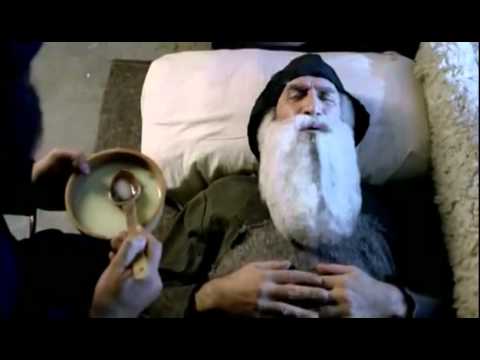
We also recently watched another film I can recommend as excellent: the life of Saint Charbel (in Arabic with English subtitles). It is well-written, well-acted, and presents the biography of a hermit in a compelling way with little elaboration. I would rate it as a top quality film if not for the unfortunate flaw of terrible costume beards.


Saint Augustine of Hippo on the Second Coming

Well, we are in the last two weeks of Ordinary Time, something that the Office of Readings today brought home to me with a discourse by Saint Augustine that focuses on preparation for the second coming of Christ. 

Some of my reflection (full text below):

What is more true than that they should not themselves expect mercy from the judge, who themselves were unwilling to show mercy. What is imputed to those placed on his left side? That they refused to show mercy. 
The only criterion ever given by Jesus for particular judgment is whether mercy was freely given, and it should therefore be the most desirable of attributes. Mercy cannot be understood without justice: we know what we deserve and fear to suffer those consequences. Thinking of them as separate, I want to prefer one over the other, but in the Divine Essence these are not separate: God is entirely Mercy, God is completely Justice, and they are therefore inseparable. 

Let us hate our sins and love him who will exact punishment for them.
It is a strange idea that we should be grateful for punishment, that this ought to increase our love for God. But justice is an attribute of our Creator and something built into our nature: to love justice is essentially human, and by overcoming fear we come to desire it even for our own offenses. It is a gift that allows us to grow through our faults, a demonstration of God's desire that we overcome obstacles in order to increase and purify our love; he gives us the remedy of mercy by the treatment of justice.

If you wish to receive mercy, be merciful before he comes; forgive whatever has been done against you; give of your abundance. 
Here the Doctor makes it clear that he is referring to giving of material wealth, yet even those of us who lacking that have much to give in forgiveness. Everyone who receives God's forgiveness and mercy will receive it in abundance and therefore have much to give to others.


Second reading
From a discourse on the Psalms by Saint Augustine, bishop
Let us not resist the first coming, so that we may not dread the second

All the trees of the forest will exult before the face of the Lord, for he has come, he has come to judge the earth. He has come the first time, and he will come again. At his first coming, his own voice declared in the gospel: Hereafter you shall see the Son of Man coming upon the clouds. What does he mean by hereafter? Does he not mean that the Lord will come at a future time when all the nations of the earth will be striking their breasts in grief ? Previously he came through his preachers, and he filled the whole world. Let us not resist his first coming, so that we may not dread the second.

What then should the Christian do? He ought to use the world, not become its slave. And what does this mean? It means having, as though not having. So says the Apostle: My brethren, the appointed time is short: from now on let those who have wives live as though they had none; and those who mourn as though they were not mourning; and those who rejoice as though they were not rejoicing; and those who buy as though they had no goods; and those who deal with this world as though they had no dealings with it. For the form of this world is passing away. But I wish you to be without anxiety. He who is without anxiety waits without fear until his Lord comes. For what sort of love of Christ is it to fear his coming? Brothers, do we not have to blush for shame? We love him, yet we fear his coming. Are we really certain that we love him? Or do we love our sins more? Therefore let us hate our sins and love him who will exact punishment for them. He will come whether we wish it or not. Do not think that because he is not coming just now, he will not come at all. He will come, you know not when; and provided he finds you prepared, your ignorance of the time of his coming will not be held against you.

All the trees of the forest will exult. He has come the first time, and he will come again to judge the earth; he will find those rejoicing who believed in his first coming, for he has come.

He will judge the world with equity and the peoples in his truth. What are equity and truth? He will gather together with him for the judgment his chosen ones, but the others he will set apart; for he will place some on his right, others on his left. What is more equitable, what more true than that they should not themselves expect mercy from the judge, who themselves were unwilling to show mercy before the judge’s coming. Those, however, who were willing to show mercy will be judged with mercy. For it will be said to those placed on his right: Come, blessed of my Father, take possession of the kingdom which has been prepared for you from the beginning of the world. And he reckons to their account their works of mercy: For I was hungry and you gave me food to eat; I was thirsty and you gave me drink.

What is imputed to those placed on his left side? That they refused to show mercy. And where will they go? Depart into the everlasting fire. The hearing of this condemnation will cause much wailing. But what has another psalm said? The just man will be held in everlasting remembrance; he will not fear the evil report. What is the evil report? Depart into the everlasting fire, which was prepared for the devil and his angels. Whoever rejoices to hear the good report will not fear the bad. This is equity, this is truth.

Or do you, because you are unjust, expect the judge not to be just? Or because you are a liar, will the truthful one not be true? Rather, if you wish to receive mercy, be merciful before he comes; forgive whatever has been done against you; give of your abundance. Of whose possessions do you give, if not from his? If you were to give of your own, it would be largess; but since you give of his, it is restitution. For what do you have, that you have not received? These are the sacrifices most pleasing to God: mercy, humility, praise, peace, charity. Such as these, then, let us bring and, free from fear, we shall await the coming of the judge who will judge the world in equity and the peoples in his truth.

Sunday, November 9, 2014

Saint Gregory of Nyssa on Prayer and Thanksgiving


Thanksgiving is the foundation of Christian prayer, yet often seems like an obligation or afterthought to the time I want Jesus to spend fixing my problems. Awareness of its importance is one reminder not to skimp on gratitude in prayer, and so I have been looking at teachings on it over the course of the last several weeks.

This excerpt is from Saint Gregory's teaching on the Lord's Prayer and is a very circumspect reflection on how objective inspection of life yields more than enough reasons for gratitude to God.


In return for all that we have received, we have but one gift to exchange with the Benefactor – prayer and thanksgiving.

I can envision the possibility that we could extend our conversation with God in thanksgiving and prayer for the whole duration of life.

Nevertheless, we would still fall so short in adequate exchanged value, as if we had never even begun to think about a return gift to the Benefactor.

For example, the Lord’s generosity is received in all dimensions of time measured in three parts the past, the present, and the future.

If you think of the present, it is in Him that you live. If the future, it is He who is the hope of your expectations. If the past, you did not even exist before you were created by Him.

You benefited by receiving your very existence from Him. Once born, you benefited by living and moving in Him (Acts 17:28), as the Apostle says.

Your future hopes are dependent on the same divine energy… for in Him we live and move and have our being, as also some of your own poets have said, ʻFor we are also His offspring.ʼ

Only the present is at your disposal, but even if you never cease giving thanks to God, you will barely render satisfaction for the gift of the present.

Neither for the future, nor for the past, can you conceive some way to give back sufficient thanks to God for all the things you owe Him.

Yet we are so lacking in thanksgiving that we do not show gratitude even in what is possible:

[...]  Who has laid out the earth beneath my feet? Who has given me reason to make the seas passable? Who has established heaven for my sake? Who lights up the sun before my eyes? Who “makes springs gush forth in valleys” (Ps 104:10)?

[...] Who has made me, lifeless dust that I am, to share in both life and reason? Who has formed this clay according to the image of the divine seal? Who has restored again in me that ancient beauty of the divine image which had been darkened by sin?

Having been exiled from paradise and deprived of the tree of life, who draws me back to the original bliss from being engulfed in the pit of material life? Scripture says, “There is no one who has understanding” (Rom 3:11).

If we contemplated these things, we would offer endless thanksgiving without ceasing throughout our entire life. But now nearly all human beings are quick to pursue only material things.

[...]  But no word whatever is said about God’s true blessings, whether those visible or those promised.

Gregory of Nyssa (c 335 – after 394): First Homily on The Lord’s Prayer.

Sunday, November 2, 2014

Saint Aphrahat the Persian on Love

This week I discovered the writings of a rather obscure saint- Saint Aphrahat the Persian.
His sermon really grabbed my attention because charity was a big theme in my prayer last week and the line If [Jesus] commanded us to love our enemies and to pray for those who hate us, what shall be our excuse to Him in the day of judgment, who have hated our brothers and our own members? stayed with me after reading.

I had the opportunity to work at a soup kitchen with the other novices on Saturday morning and while peeling turnips I was thinking about love of neighbor, specifically the remote versus the proximate neighbor. I noted that while it is easier to serve others in charity in the place, time, and manner of my choosing, this exercise is foundational for learning to do so in other contexts as well and that it trains the heart to respond in charity when it is not convenient.

Saint Ephrem, Saint Isaac the Syrian, Saint Aphrahat
Love is more excellent than anything else, and by it the righteous ones of the old times were perfected.

Scripture shows concerning Moses that he gave himself in behalf of the sons of his people, and he wished that he might be blotted out of the book of life if only the people might not be blotted out.

And also when they rose up against him to stone him, he offered up prayer before God in their behalf that they might be saved.

And David also showed an example of love when he was persecuted by Saul, and a trap was continually set for his life so that they might kill him.

David by love was generously performing acts of mercies in behalf of Saul his enemy, who was seeking his life.

Saul was twice delivered into the hands of David, and he did not kill him and repaid good in place of evil. Because of this good did not depart from his house, and he who forsook him was forsaken.

And Saul who repaid evil in place of good, evil did not depart from his house, and He called to God and He did not answer him, and he fell by the sword of the Philistines, and David wept over him bitterly.

And David fulfilled beforehand the precept of our Saviour, who said: “Love your enemies,” and “forgive, and it shall be forgiven unto you.” Thus David loved and was loved, and forgave and it was forgiven unto him.

And Elisha also showed love in respect to this, when his enemies came against him to take him so that they might do evil to him, and he, doing good to them, set forth bread and water before them and sent them away from him in peace.

Elisha fulfilled the word which is written: “If thine enemy is hungry feed him, and if he thirsts give him to drink.”

And also Jeremiah the prophet in behalf of those who made him a captive in a pit and were continually putting him to torture, but he also prayed ardently for them before God.

By this example of those who went before our Saviour taught us that we should love our enemies and pray for those who hate us.

And if He commanded us to love our enemies and to pray for those who hate us, what shall be our excuse to Him in the day of judgment, who have hated our brothers and our own members?

Because we are of the Body of Christ and members of His members. For he who hates one of the members of Christ will be separated from the whole body, and he who hates his brother will be separated from the sons of God.

Aphrahat the Persian (c.270-c.345): Demonstrations, 2 – On Love (17; 18).

Sunday, October 26, 2014

The Wisdom of the Saints

A year ago I stole an idea from Fr. John Cameron and the Magnificat daily prayer companion to take the Litany of the Saints and collect favorite sayings of each individual. Since then, my collection has grown steadily and proved to be a repository of holy counsel worth returning to frequently.

For the Solemnity of All Saints and the month of November, I decided to share some selections that I will be reflecting on over the next few weeks. It can be prayed like the Litany in its entirety, but I usually prefer to select one or a few quotes to reflect on and appropriate more deeply.


Holy Mary, Mother of God: “Do whatever he tells you."

Saint Gabriel: “With God nothing is impossible."

Saint Michael: “Who is like God?”

Saint Raphael: "It is good to praise God and to exalt his name, worthily declaring the works of God."

Saint John the Baptist: “Bear fruit in keeping with repentance."

Saint Joseph: [pause in reverent silence]

Saint Peter: "Rejoice inasmuch as you participate in Christ's sufferings, so you may rejoice when his glory is revealed.”

Saint Paul: “I consider that the sufferings of this present time are not worthy to be compared with the glory that is to be revealed to us.”

Saint James: “Consider it pure joy, my brothers, whenever you face trials of many kinds, because you know that the testing of your faith produces perseverance."

(+ 99) Saint Clement of Rome: “You have searched the scriptures, which are true, which were given through the Holy Spirit; and you know that nothing unrighteous or counterfeit is written in them.”

(+107) Saint Ignatius of Antioch: "I prefer death in Christ Jesus to power over the farthest limits of the earth. He who died in place of us is the one object of my quest. He who rose for our sakes is my one desire." 

(+165) Saint Justin Martyr: “The greatest grace God can give someone is to send him a trial he cannot bear with his own powers – and then sustain him with his grace so he may endure to the end and be saved.”

(+ 180) Saint Cecilia: “To die for Christ is not to sacrifice one’s youth but to renew it. Jesus Christ returns a hundredfold all offered him, and adds to it eternal life.”


(+ 202) Saint Irenaeus of Lyons: “The Glory of God is man fully alive.”

(+ 216) Saint Clement of Alexandria: “’Eat my flesh, and drink my blood.’ The Lord supplies us with these intimate nutrients, he delivers over his flesh and pours out his blood, and nothing is lacking for the growth of his children." 

(+ 298) Saint Athanasius: “Devils take great delight in fullness, and drunkeness, and bodily comfort. Fasting possesses great power and it works glorious things. To fast is to banquet with angels.”

(+ 304) Saint Agnes of Rome: “Christ made my soul beautiful with the jewels of grace and virtue. I belong to Him whom the angels serve.”

(+ 304) Saint Lucy of Syracuse: “No one's body is polluted so as to endanger the soul if it has not pleased the mind."

(+ 356) Saint Anthony the Great: "Do not trust in your own righteousness, do not worry about the past, but control your tongue and your stomach. Some have afflicted their bodies by asceticism, but they lack discernment, and so they are far from God."

(+ 368) St. Hilary of Poitiers: “There is no space where God is not; space does not exist apart from Him. He is in heaven, in hell, beyond the seas; dwelling in all things and enveloping all. Thus He embraces, and is embraced by, the universe, confined to no part of it but pervading all.”

(+ 373) Saint Ephrem the Syrian: “O Jesus, in that hour when darkness like a cloak shall be spread over all things, may your grace shine on us in place of the earthly sun.”

(+ 379) Saint Basil the Great: “Silence is the beginning of purifying the soul.”

(+ 386) Saint Cyril of Jerusalem: “This synthesis of faith was not made to accord with human opinions, but rather what was of the greatest importance was gathered from all the Scriptures, to present the one teaching of the faith in its entirety.”

(+ 390) Saint Gregory Nazianzen: "Give something, however small, to the one in need. For it is not small to one who has nothing. Neither is it small to God, if we have given what we could." 

(+ 395) Saint Gregory of Nyssa: "Whatever name we may adopt to signify the perfume of divinity, it is not the perfume itself which we signify by our expressions; rather, we reveal just the slightest trace of the divine odor by means of our theological terms."

(+ 397) Saint Ambrose: “Every soul who has believed both conceives and generates the Word of God and recognizes his works. Let the soul of Mary be in each one of you to magnify the Lord.”

(+ 407) Saint John Chrysostom: “Jesus Christ gave you all; he left nothing for himself.”

(+ 420) Saint Jerome: “May your actions never be unworthy of your words, may it not happen that, when you preach in church, someone might say to himself: ‘Why does he therefore not act like this?’ How could a teacher, on a full stomach, discuss fasting; even a thief can blame avarice; but in the priest of Christ the mind and words must harmonize.”

(+ 430) Saint Augustine: “We have been promised something we do not yet possess. It is good for us to persevere in longing until we receive what was promised, and yearning is over.”

(+ 444) Saint Cyril of Alexandria: “If you feel scorched by the fever of impurity, go to the banquet of the Angels; and the spotless Flesh of Christ will make you pure and chaste.”

(+ 445) Saint Arsenius the Great: “I have often been sorry for having spoken, but never for holding my tongue.”

(+ 450) Saint Peter Chrysologus: “Peace is the plenitude that fulfills our desires. As Christ left the world, he wished to leave the gift he wanted to find when he returned.”

(+ 461) Saint Leo the Great: “Let us be raised to the one who made the dust of our lowliness into the body of his glory.”

(+ c. 493) Saint Patrick: “I arise today through the strength of Christ with his baptism, through the strength of his crucifixion with his burial, through the strength of his Resurrection with his Ascension.”

(+ 523) Saint Brigid of Kildare: "I would like myself to be a rent payer to the Lord; that I should suffer distress, that he would bestow a good blessing upon me. I would like a great lake of beer for the King of Kings. I would like to be watching Heaven's family drinking it through all eternity."

(+ 547) Saint Benedict: “It is only we who brood over our sins. God does not brood over them, God dumps them at the bottom of the sea.”

(+ 604) Saint Gregory the Great: “We have been truly set free from subjection to sin because we are united to him who is truly free.”

(+ 615) Saint Columban: “The more the soul loves, the more it desires to love, and the greater its suffering, the greater its healing.”

(+ 636) Saint Isidore of Seville: “Confession heals, confession justifies, confession grants pardon of sin, all hope consists in confession; in confession there is a chance for mercy. “

(+649) Saint John Climacus: “Even though one is well advanced in virtue, should he stop mortifying himself, he soon would lose his modesty and virtue - just as fertile soul quickly becomes dry and arid and produces nothing but thorns and thistles if it is not cultivated.”

(+ 662) Saint Maximus the Confessor: “God made us so that we might become partakers of the divine nature and sharers in eternity, and so that we might come to be like him through deification by grace.”

(+ 700) Saint Isaac the Syrian: “This life has been given to you for repentance; do not waste it in vain pursuits.”

(+ 1101) Saint Bruno of Cologne: "No act is charitable if it is not just." 

(+ 1109) Saint Anselm: “God who made all things made himself of Mary, and thus he refashioned everything he had made.”

(+ 1153) Saint Bernard of Clairvaux: “We are to love God for Himself, because of a twofold reason; nothing is more reasonable, nothing more profitable." 

(+ 1179) Saint Hildegard of Bingen: “God has arranged all things in the world in consideration of everything else.”

(+ 1221) Saint Dominic: “I shall be more useful to you after my death and I shall help you more effectively than during my life.”

(+ 1226) Saint Francis of Assisi: “May I feel in my heart, as far as possible, that abundance of love with which you, Son of God, are inflamed.”

(+ 1231) Saint Anthony of Padua: “Consider every day that you are then for the first time beginning; and always act with the same fervor as on the first day you began.”

(+ 1250) Saint Albert the Great: “He who enters into the secret place of his own soul passes beyond himself, and does in very truth ascend to God.”

(+ 1253) Saint Clare: “Live and hope in the Lord, and let your service be according to reason.”

(+ 1274) Saint Thomas Aquinas: “The life of man consists in the love that principally sustains him and in which he finds his greatest satisfaction.”

(+ 1302) Saint Gertrude the Great: “Once again I give you thanks for your merciful love, kindest Lord, for having found another way of rousing me from my inertia.”

(+ 1274) Saint Bonaventure: “God created all things not to increase his glory, but to show it forth and communicate it.”

(+ 1380) Saint Catherine of Siena: “When we love something we don’t care what sort of abuse or injury or pain we might have to go through to get it; we are concerned only with satisfying our desire for the thing we love.”

(+ 1419) Saint Vincent Ferrer: “In time of temptation continue the good you have begun before temptation.”

(+ 1444) Saint Bernardine of Siena: “If we but recollect the name of Jesus, it is to fight with confidence—for this name subjects all the fury of our enemies to us.”

(+ 1510) Saint Catherine of Genoa: “God lets the soul share his goodness so that it becomes one with him. The nearer the soul comes to him, the more it partakes of what is his.”

(+ 1535) Saint Thomas More: "Tribulation is a gift from God - one that he especially gives His special friends." 

(+ 1540) Saint Angela Merici: “Strengthen, O Lord, my senses and my affections, that they may not stray into betrayal of trust.”

(+ 1552) Saint Francis Xavier: “God our Lord knows the intentions which he in his mercy has wished to place in us, and the great hope and confidence which he in his goodness has wished that we should have in him.”

(+ 1556) Saint Ignatius of Loyola: “As long as obedience is flourishing, all the other virtues will be seen to flourish and bear fruit.”

(+ 1562) Saint Peter of Alcantara: “Truly, matters in the world are in a bad state; but if you and I begin in earnest to reform ourselves, a really good beginning will have been made.”


(+ 1582) Saint Teresa of Jesus: "From silly devotions and sour-faced saints, good Lord, deliver us!" 

(+ 1584) Saint Charles Borromeo: “The candle that gives light to others must itself be consumed. Thus we also have to act. We ourselves are consumed to give a good example to others.”

(+ 1591) Saint John of the Cross: “In giving us His Son, His only Word, He spoke everything to us at once in this sole Word -- and He has no more to say...because what he spoke before to the prophets in parts, he has now spoken all at once by giving us the All Who is His Son.”

(+ 1591) Saint Aloysius Gonzaga: “As God is above all created things, honors, possessions, so should our internal esteem of his Divine Majesty surpass our esteem or idea of anything whatever.”

(+ 1595) Saint Philip Neri: "A joyful heart is more easily made perfect than a downcast one."

(+ 1595) Saint Robert Southwell: “Jesus, possess my mind with your presence and ravish it with your love, that my delight may be to be embraced in the arms of your protection.”

(+ 1607) Saint Mary Magdalene di Pazzi: “A little drop of simple obedience is worth a million times more than a whole vase of the choicest contemplation.”

(+1617) Saint Rose of Lima: "Apart from the cross, there is no other ladder by which we may get to heaven." 

(+ 1621) Saint Robert Bellarmine: "Charity is that with which no man is lost, and without which no man is saved." 

(+ 1622) Saint Francis de Sales: “The more one mortifies his natural inclinations, the more he renders himself capable of receiving divine inspirations and of progressing in virtue.”

(+ 1646) Saint Isaac Jogues: “My hope is in God, who needs not us to accomplish his designs. We must endeavor to be faithful to him.”

(+ 1654) Saint Peter Claver: “Man’s salvation and perfection consists in doing the will of God, which he must have in view in all things, and at every moment of his life.”

(+ 1660) Saint Vincent de Paul: “He who gives little import to exterior mortifications, claiming that interior mortifications are more perfect, clearly shows that he is not mortified at all, exteriorly nor interiorly.”

(+ 1682) Saint Claude de la Columbiere: “My Jesus, let me live in your heart and pour all my bitterness into it, where it will be utterly consumed.”

(+ 1690) Saint Margaret Mary Alacoque: “All my pleasure in this land of exile is that of having every kind of suffering found on the cross, deprived of every other consolation except that of the Sacred Heart.”

(+ 1716) Saint Louis de Montfort: “He who fights even the smallest distractions faithfully, when he says even the smallest prayer, will also be faithful in great things.”

(+ 1719) Saint Jean Baptiste de La Salle: “Never speak to anyone except with kindness.”

(+ 1775) Saint Paul of the Cross: “It is an excellent and holy practice to call to mind and meditate on our Lord's Passion, since it is by this path that we shall arrive at union with God. In this, the holiest of all schools, true wisdom is learned, for it was there that all the saints became wise.”

(+ 1787) Saint Alphonsus di Liguori: “We must love God in the way that pleases him, and not just in a way that suits ourselves. God wishes people to empty themselves of everything and to be filled with his divine love.”

(+ 1820) Saint Clement Hofbauer: “Something can be done everywhere for the glory of God.”

(+ 1821) Saint Elizabeth Ann Seton: “O Jesus, sure joy of my soul, give me but a true love of you. Let me seek you as my only good.”

(+ 1859) Saint Jean-Baptiste-Marie Vianney: "We will either accuse ourselves or excuse ourselves." 

(+ 1860) Saint John Neumann: “Though God hates sin more than any other thing, he loves us poor miserable sinners. He ardently desires the welfare of our souls as if his own happiness depended on it.”

(+ 1868) Saint Peter Julian Eymard: “Abide in the home of the divine and fatherly goodness of God like his child who knows nothing, does nothing, makes a mess of everything, but nevertheless lives in his goodness.”

(+ 1870) Saint Anthony Marie Claret: “Our Lord has created persons for all states in life, and in all of them we see people who achieved sanctity by fulfilling their obligations well.”

(+ 1876) Saint Catherine Labouré: “I knew nothing; I was nothing. For this reason God chose me.”

(+ 1889) Saint Damien de Veuster of Moloka’i: “In the face of the too real dangers that surround me I repeat: ‘Lord, I have placed all my hope in you. I will never be confounded.”

(+ 1897) Saint Therese of Lisieux: “Miss no single opportunity of making some small sacrifice, here by a smiling look, there by a kindly word; always doing the smallest right and doing it all for love.” 

(+ 1898) Saint Charbel Makhloof: “Just as one person's sins affect all, so a person's holiness becomes like a light for others.” 


(+ 1914) Saint Pius X: "Holy Communion is the shortest and safest way to heaven."

(+ 1917) Saint Francis Xavier Cabrini: “Stretch every fiber of my being, dear Lord, that I may more easily fly towards you. May your Spirit, which once breathed over the chaos of the earth, give life to all the powers of my soul.”

(+ 1920) Saint Teresa of the Andes: “True friendship consists in mutually perfecting one another and drawing closer to God.”

(+ 1928) Saint Toribio Romo: "Christ said, 'I am the Truth'; he did not say 'I am the custom.'" 

(+ 1938) Saint Maria Faustina Kowalska: “Jesus, I trust in you.”

(+ 1941) Saint Maximilian Kolbe: “Shall the urge for complete and total happiness, inherent to human nature, be the only need to remain unfulfilled and unsatisfied? No, even this longing can be fulfilled by the infinite and eternal God.”

(+ 1942) Saint Teresa Benedicta of the Cross: “Holy realism has a certain affinity with the realism of the child who receives and responds to the impressions with unimpaired vigor and vitality, and with uninhibited simplicity.”

(+ 1968) Saint Pius of Pietrelcina: "Our Lord loves you and loves you tenderly; and if He does not let you feel the sweetness of His love, it is to make you more humble and abject in your own eyes."  

(+ 2005) St. John Paul II: "Do not be afraid. Open wide the doors to Christ."