Showing posts with label Doctor. Show all posts

Saturday, September 12, 2015

St. Bernard on the Most Holy Name of Mary

Today is the titular feast of the Congregation of the Oblates of the Virgin Mary, the most important day of the year for us; our birthday celebration, if you will.
It is a day for celebrating our family, giving thanks to God for all the gifts he gives us, and renewing our dedication to serving the Congregation and the Church through the charism we have been given.

Most of the readings from the liturgies of the day recall the Annunciation, when our salvation begins when an archangel speaks the name of Mary, the pronouncement in which the salvation of each individual is bound (St. Louis de Montfort).

Her name bears immense power because of the unique bond between Mary and her Son. When God sent his Son born of a woman, he instituted a once and for all order of salvation in which the union of Mother and Child stands at the center (Romanus Cessario, OP).


Here is an excerpt from the Office of Readings for the day:

Second Reading: Mariam cogita, Mariam invoca, St. Bernard of Clairvaux, Abbot and Doctor

And the Virgin's name was Mary. Let us now say a few words about this name, which is said to mean "star of the sea," and is so becoming to the Virgin Mother... All of you, whoever you are, who feel that in the tidal wave of this world you are near to being tossed about among the storms and tempests than walking on the land, if you do not want to founder in the tempest, do not turn your eyes away from this shining star. When the wind of temptation blows up within you, when you strike upon the rock of tribulation, gaze up at this star, call out to Mary. If you are tossed by the waves of pride or ambition, slander or envy, look to the star, call upon Mary. If anger or greed or the desires of the flesh are battering the ship of your soul, gaze up at Mary. When the immensity of your sin weighs you down and you are ashamed of your guilty conscience, when the terrifying thought of judgment appalls you and you begin to sink into the gulf of sadness or the abyss of despair, think of Mary, call upon Mary. Let her name be even on your lips, ever in your heart. Follow the example of her life and you will obtain the favor of her prayer. Following her, you will not go astray. Invoking her, you will not despair. Thinking of her, you will not wander away. Upheld by her, you will not stumble. Protected by her, you will not fear. Guided by her, you will not tire. Favored by her, you will reach the goal. Then you will know by your own experience how true it is that "the Virgin's name was Mary."


Sunday, December 21, 2014

Saint Alphonsus on Uniformity with God's Will

During my spiritual reading this weekend, I was looking for material on conformity to the will of God, something that is becoming a focus for me in my retreat preparation. I found something by Saint Alphonsus that contrasts conformity of will with uniformity of will, the goal he holds as crucial in the spiritual life. He distinguishes joining the will to God and actually appropriating the will of God, and that the latter is more pleasing.


A single act of uniformity with the divine will suffices to make a saint. Behold while Saul was persecuting the Church, God enlightened him and converted him.

What does Saul do? What does he say? Nothing else but to offer himself to do God’s will: “Lord, what wilt thou have me to do” (Acts 9:6).

In return the Lord calls him a vessel of election and an apostle of the gentiles: “This man is to me a vessel of election, to carry my name before the gentiles”.

Absolutely true – because he who gives his will to God, gives him everything. He who gives his goods in alms, his blood in scourgings, his food in fasting, gives God what he has. But he who gives God his will, gives himself, gives is.

everything he

Such a one can say: “Though I am poor, Lord, I give thee all I possess; but when I say I give thee my will, I have nothing left to give thee.” This is just what God does require of us: “My son, give me thy heart” (Prov. 23:26).

St. Augustine’s comment is: “There is nothing more pleasing we can offer God than to say to him: ‘Possess thyself of us’”.

We cannot offer God anything more pleasing than to say: Take us, Lord, we give thee our entire will. Only let us know thy will and we will carry it out.

If we would completely rejoice the heart of God, let us strive in all things to conform ourselves to his divine will. Let us not only strive to conform ourselves, but also to unite ourselves to whatever dispositions God makes of us.

Conformity signifies that we join our wills to the will of God. Uniformity means more – it means that we make one will of God’s will and ours, so that we will only what God wills; that God’s will alone, is our will.

This is the summit of perfection and to it we should always aspire; this should be the goal of all our works, desires, meditations and prayers.

To this end we should always invoke the aid of our holy patrons, our guardian angels, and above all, of our mother Mary, the most perfect of all the saints because she most perfectly embraced the divine will.

The greatest glory we can give to God is to do his will in everything. Our Redeemer came on earth to glorify his heavenly Father and to teach us by his example how to do the same.

St. Paul represents him saying to his eternal Father: “Sacrifice and oblation thou wouldst not: But a body thou hast fitted to me…Then said I: Behold I come to do thy will, O God” (Habakkuk 10:5-7). Thou hast refused the victims offered thee by man; thou dost will that I sacrifice my body to thee. Behold me ready to do thy will.

Our Lord frequently declared that he had come on earth not to do his own will, but solely that of his Father: “I came down from heaven, not to do my own will, but the will of him that sent me” (John 6:38).

He spoke in the same strain in the garden when he went forth to meet his enemies who had come to seize him and to lead him to death: “But that the world may know that I love the Father: and as the Father hath given me commandment, so do I; arise and let us go hence” (John 14:31).

Furthermore, he said he would recognize as his brother, him who would do his will: “Whosoever shall do the will of my Father who is in heaven, he is my brother” (Matthew 12:50).

To do God’s will – this was the goal upon which the saints constantly fixed their gaze. They were fully persuaded that in this consists the entire perfection of the soul.

Blessed Henry Suso used to say: “It is not God’s will that we should abound in spiritual delights, but that in all things we should submit to his holy will.”

“Those who give themselves to prayer,” says St. Teresa, “should concentrate solely on this: the conformity of their wills with the divine will. They should be convinced that this constitutes their highest perfection. The more fully they practice this, the greater the gifts they will receive from God, and the greater the progress they will make in the interior life.”

A certain Dominican nun was vouchsafed a vision of heaven one day. She recognized there some persons she had known during their mortal life on earth.

It was told her these souls were raised to the sublime heights of the seraphs on account of the uniformity of their wills with that of God’s during their lifetime here on earth.

Blessed Henry Suso, mentioned above, said of himself: “I would rather be the vilest worm on earth by God’s will, than be a seraph by my own.”

During our sojourn in this world, we should learn from the saints now in heaven, how to love God. The pure and perfect love of God they enjoy there, consists in uniting themselves perfectly to his will.

It would be the greatest delight of the seraphs to pile up sand on the seashore or to pull weeds in a garden for all eternity, if they found out such was God’s will.

Our Lord himself teaches us to ask to do the will of God on earth as the saints do it in heaven: “Thy will be done on earth as it is in heaven” (Matthew 6:10).

Alphonsus Liguori (1696-1787): Uniformity with God’s will

Sunday, November 16, 2014

Saint Augustine of Hippo on the Second Coming

Well, we are in the last two weeks of Ordinary Time, something that the Office of Readings today brought home to me with a discourse by Saint Augustine that focuses on preparation for the second coming of Christ. 

Some of my reflection (full text below):

What is more true than that they should not themselves expect mercy from the judge, who themselves were unwilling to show mercy. What is imputed to those placed on his left side? That they refused to show mercy. 
The only criterion ever given by Jesus for particular judgment is whether mercy was freely given, and it should therefore be the most desirable of attributes. Mercy cannot be understood without justice: we know what we deserve and fear to suffer those consequences. Thinking of them as separate, I want to prefer one over the other, but in the Divine Essence these are not separate: God is entirely Mercy, God is completely Justice, and they are therefore inseparable. 

Let us hate our sins and love him who will exact punishment for them.
It is a strange idea that we should be grateful for punishment, that this ought to increase our love for God. But justice is an attribute of our Creator and something built into our nature: to love justice is essentially human, and by overcoming fear we come to desire it even for our own offenses. It is a gift that allows us to grow through our faults, a demonstration of God's desire that we overcome obstacles in order to increase and purify our love; he gives us the remedy of mercy by the treatment of justice.

If you wish to receive mercy, be merciful before he comes; forgive whatever has been done against you; give of your abundance. 
Here the Doctor makes it clear that he is referring to giving of material wealth, yet even those of us who lacking that have much to give in forgiveness. Everyone who receives God's forgiveness and mercy will receive it in abundance and therefore have much to give to others.


Second reading
From a discourse on the Psalms by Saint Augustine, bishop
Let us not resist the first coming, so that we may not dread the second

All the trees of the forest will exult before the face of the Lord, for he has come, he has come to judge the earth. He has come the first time, and he will come again. At his first coming, his own voice declared in the gospel: Hereafter you shall see the Son of Man coming upon the clouds. What does he mean by hereafter? Does he not mean that the Lord will come at a future time when all the nations of the earth will be striking their breasts in grief ? Previously he came through his preachers, and he filled the whole world. Let us not resist his first coming, so that we may not dread the second.

What then should the Christian do? He ought to use the world, not become its slave. And what does this mean? It means having, as though not having. So says the Apostle: My brethren, the appointed time is short: from now on let those who have wives live as though they had none; and those who mourn as though they were not mourning; and those who rejoice as though they were not rejoicing; and those who buy as though they had no goods; and those who deal with this world as though they had no dealings with it. For the form of this world is passing away. But I wish you to be without anxiety. He who is without anxiety waits without fear until his Lord comes. For what sort of love of Christ is it to fear his coming? Brothers, do we not have to blush for shame? We love him, yet we fear his coming. Are we really certain that we love him? Or do we love our sins more? Therefore let us hate our sins and love him who will exact punishment for them. He will come whether we wish it or not. Do not think that because he is not coming just now, he will not come at all. He will come, you know not when; and provided he finds you prepared, your ignorance of the time of his coming will not be held against you.

All the trees of the forest will exult. He has come the first time, and he will come again to judge the earth; he will find those rejoicing who believed in his first coming, for he has come.

He will judge the world with equity and the peoples in his truth. What are equity and truth? He will gather together with him for the judgment his chosen ones, but the others he will set apart; for he will place some on his right, others on his left. What is more equitable, what more true than that they should not themselves expect mercy from the judge, who themselves were unwilling to show mercy before the judge’s coming. Those, however, who were willing to show mercy will be judged with mercy. For it will be said to those placed on his right: Come, blessed of my Father, take possession of the kingdom which has been prepared for you from the beginning of the world. And he reckons to their account their works of mercy: For I was hungry and you gave me food to eat; I was thirsty and you gave me drink.

What is imputed to those placed on his left side? That they refused to show mercy. And where will they go? Depart into the everlasting fire. The hearing of this condemnation will cause much wailing. But what has another psalm said? The just man will be held in everlasting remembrance; he will not fear the evil report. What is the evil report? Depart into the everlasting fire, which was prepared for the devil and his angels. Whoever rejoices to hear the good report will not fear the bad. This is equity, this is truth.

Or do you, because you are unjust, expect the judge not to be just? Or because you are a liar, will the truthful one not be true? Rather, if you wish to receive mercy, be merciful before he comes; forgive whatever has been done against you; give of your abundance. Of whose possessions do you give, if not from his? If you were to give of your own, it would be largess; but since you give of his, it is restitution. For what do you have, that you have not received? These are the sacrifices most pleasing to God: mercy, humility, praise, peace, charity. Such as these, then, let us bring and, free from fear, we shall await the coming of the judge who will judge the world in equity and the peoples in his truth.

Sunday, November 9, 2014

Saint Gregory of Nyssa on Prayer and Thanksgiving


Thanksgiving is the foundation of Christian prayer, yet often seems like an obligation or afterthought to the time I want Jesus to spend fixing my problems. Awareness of its importance is one reminder not to skimp on gratitude in prayer, and so I have been looking at teachings on it over the course of the last several weeks.

This excerpt is from Saint Gregory's teaching on the Lord's Prayer and is a very circumspect reflection on how objective inspection of life yields more than enough reasons for gratitude to God.


In return for all that we have received, we have but one gift to exchange with the Benefactor – prayer and thanksgiving.

I can envision the possibility that we could extend our conversation with God in thanksgiving and prayer for the whole duration of life.

Nevertheless, we would still fall so short in adequate exchanged value, as if we had never even begun to think about a return gift to the Benefactor.

For example, the Lord’s generosity is received in all dimensions of time measured in three parts the past, the present, and the future.

If you think of the present, it is in Him that you live. If the future, it is He who is the hope of your expectations. If the past, you did not even exist before you were created by Him.

You benefited by receiving your very existence from Him. Once born, you benefited by living and moving in Him (Acts 17:28), as the Apostle says.

Your future hopes are dependent on the same divine energy… for in Him we live and move and have our being, as also some of your own poets have said, ʻFor we are also His offspring.ʼ

Only the present is at your disposal, but even if you never cease giving thanks to God, you will barely render satisfaction for the gift of the present.

Neither for the future, nor for the past, can you conceive some way to give back sufficient thanks to God for all the things you owe Him.

Yet we are so lacking in thanksgiving that we do not show gratitude even in what is possible:

[...]  Who has laid out the earth beneath my feet? Who has given me reason to make the seas passable? Who has established heaven for my sake? Who lights up the sun before my eyes? Who “makes springs gush forth in valleys” (Ps 104:10)?

[...] Who has made me, lifeless dust that I am, to share in both life and reason? Who has formed this clay according to the image of the divine seal? Who has restored again in me that ancient beauty of the divine image which had been darkened by sin?

Having been exiled from paradise and deprived of the tree of life, who draws me back to the original bliss from being engulfed in the pit of material life? Scripture says, “There is no one who has understanding” (Rom 3:11).

If we contemplated these things, we would offer endless thanksgiving without ceasing throughout our entire life. But now nearly all human beings are quick to pursue only material things.

[...]  But no word whatever is said about God’s true blessings, whether those visible or those promised.

Gregory of Nyssa (c 335 – after 394): First Homily on The Lord’s Prayer.

Sunday, October 12, 2014

True Humility

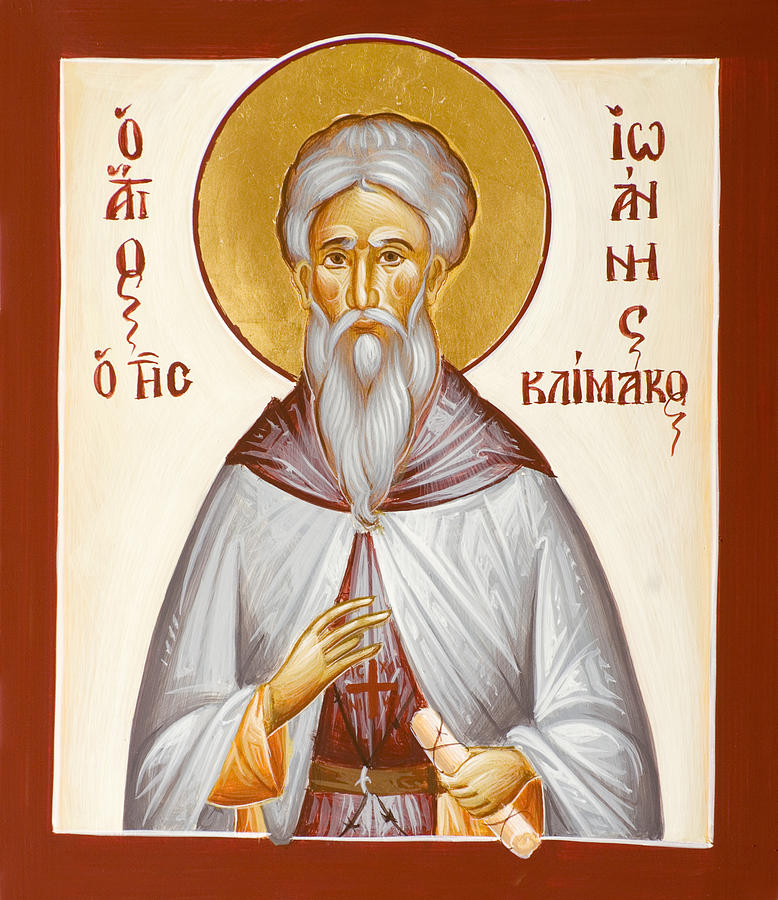
In Scripture are the words, "I humbled myself, and the Lord hastened to rescue me" (Psalm 114:6); and these words are there instead of "I have fasted," "I have kept vigil," "I lay down on the bare earth."

Saint John Climacus, The Ladder of Divine Ascent, Step 25: On Humility


Prudence in the ascetic life has been an important area of spiritual awareness for me over the past year, and the past few months in particular. It is also significantly connected to the major theme of my retreat last week: discerning true humility from false humility.

The humble heart is turned to God and acts for love and longing for the Beloved; the proud heart is turned inward on itself and acts for its own insatiable appetites. The difference shows in their attachment to their activities; the humble heart, open to God, is willing to renounce mortifications as well as pleasures, and the proud heart may cling to either or to both but is equally unwilling to let go of them, because it holds them for its own sake rather than for God's.


Sunday, September 28, 2014

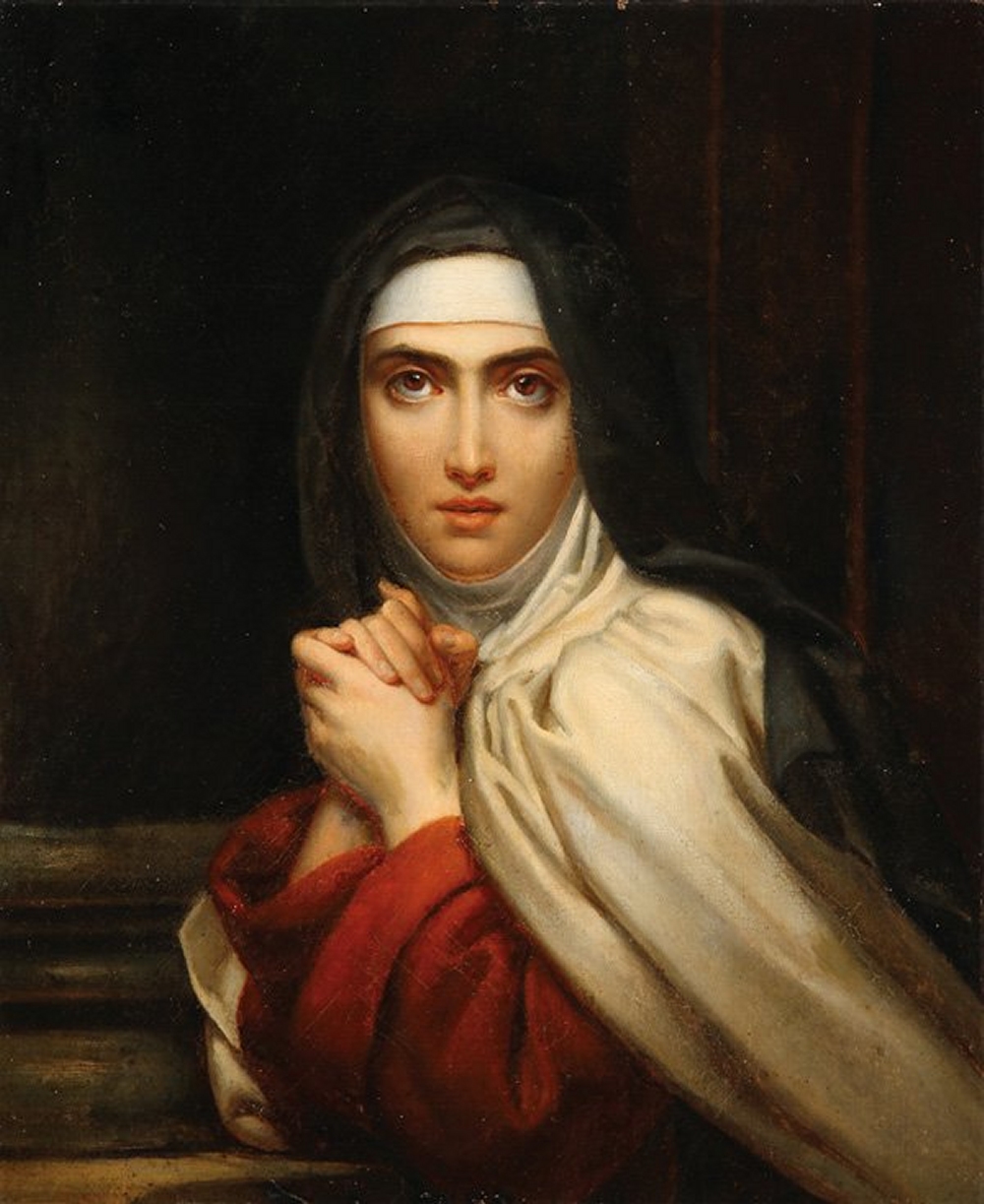
Saint Teresa of Avila on Wedding Garments

Mention of the rough garment of offenses in Saint Cyril's catechesis brought to mind another prayer of repentance. Saint Teresa of Avila felt the need to repent for time lost in her vocation, time in which she had been insincere and sought comfort rather than serving God.

In my life, I have experienced that no time is lost to God; when at last we turn to him, there is a grace to see that he was leading us all along and that the "time lost" was time he used for formation and teaching, to turn this loss to gain. Repentance is a continual process that is first the awareness of our need for God and his desire for us to receive every grace he wants to give, even the smallest of which contains him in his fullness.


O my God! Source of all mercy! I acknowledge Your sovereign power. While recalling the wasted years that are past, I believe that You, Lord, can in an instant turn this loss to gain. Miserable as I am, yet I firmly believe that You can do all things. Please restore to me the time lost, giving me Your grace, both now and in the future, that I may appear before You in "wedding garments." 
Amen.