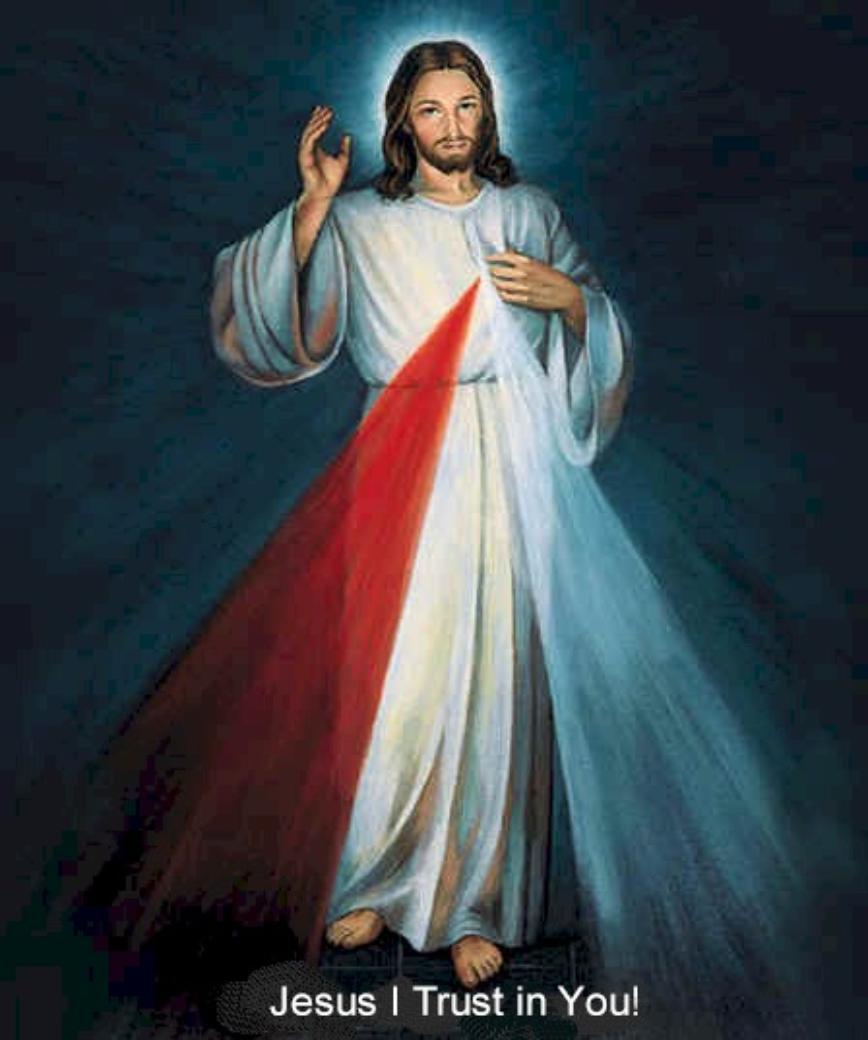
Showing posts with label Divine Mercy. Show all posts

Saturday, September 19, 2015

Bishop Robert Baron on Punishment and Gift

I occasionally catch up on Bishop Robert Baron's Word on Fire videos, my nearest attempt to keeping up with popular culture. His commentaries generally start with a current event and connect it with other current events, philosophical thinkers, ecclesial teaching, etc., so I generally find them interesting.

This particular video was fascinating to me. It explores the connection of American comedian Stephen Colbert to J.R.R. Tolkien and John Henry Cardinal Newman.


The historical connection of providence is interesting, but in particular the Tolkien quote that prompted his reflection struck me.

 "Are not all of God's punishments also gifts?"

I noticed this partly because of my own experience and partly because of my Old Testament Narratives course, in which a major focus is the Babylonian Exile and post-exilic period in which the Jewish people had to reexamine their past and relationship to God in light of a traumatic experience.

From the very beginning of human experience when man sinned, God gave punishments not for despair but for hope. Work could be man's burden but also a source of his dignity; childbearing would be painful but also how God himself would enter the world in the most intimate way; the relationships of men and women would be plagued by misunderstanding and strife, but a constant reminder that their search for fulfillment is ultimately a search for God and not each other.

For surely I know the plans I have for you, says the Lord, plans for your welfare and not for harm, to give you a future with hope. Then when you call upon me and come and pray to me, I will hear you. When you search for me, you will find me if you seek me with all your heart.         Jeremiah 29:11-13


God has allowed trials and suffering in my life. Often I do not want to reflect on it and speak to God about my experience; often I just want to cry out for relief from pain. 

And how do I see my suffering? Is it a poison or a medicine? 

Jesus entered into the world of suffering and pain not as a teacher but as a priest and victim to make us an offering to God (cf. Friday vespers responsory). He sanctified suffering beyond what God decreed in the Protoevangelium (Genesis 3:15) so that it is no longer simply a spur to rouse us from complacency and reveal our need for God but actually a way to encounter him in our brokenness. 

Nowhere is this more explicit than the message of Divine Mercy. 
I have not come to call the righteous, but sinners (Luke 5:32).
The greater the sinner, the greater the right he has to My mercy (Divine Mercy in My Soul, 723).
My grace is sufficient for you, for power is made perfect in weakness (2 Corinthians 12:9).

The icon of this Mercy is Blood and Water flowing from the pierced side of Christ, the grace he pours out in Sacraments to fill suffering sinners beginning at the points of greatest brokenness and pain in our life. 

This means opening the wounds, allowing the dead tissue to be removed and the salve to be applied, which is scary! It demands deep trust, but there is only One who heals the broken hearted and binds up their wounds (Psalm 147:3). 


Sunday, April 27, 2014

Divine Mercy Sunday

"Do not be unbelieving but believe. Blessed are they who have not seen and have believed."
John 20:27b, 29b

From Divine Mercy in My Soul, the Diary of St. Maria Faustina Kowalska:

"This Feast emerged from the very depths of My mercy, and it is confirmed in the vast depths of my tender mercies." (420)
"I desire that the Feast of Mercy be a refuge and shelter for all souls, and especially for poor sinners. On that day all the divine floodgates through which grace flow are opened. Let no soul fear to draw near to Me, even though its sins be as scarlet. My mercy is so great that no mind, be it of man or of angel, will be able to fathom it throughout all eternity." (699)


Večný Otče, obetujem ti telo a krv, dušu i božstvo tvojho najmilšieho Syna, 
Eternal Father, I offer to you the body and blood, soul and divinity of your most beloved Son, 

a nášho Pána Isusa Christa, na odčinenie našich hriechov i hriechov celého sveta. 
our Lord Jesus Christ, in expiation for our sins and the sins of the whole world.

Pre Jeho bolestné umučenie maj milosrdenstvo s nami i s celým svetom.
Because of his sorrowful passion have mercy on us and on the whole world.

Svätý Bože, Svätý Mocný, Svätý Nesmrteľný, zmiluj sa nad nami i nad celým svetom.
Holy God, Holy Mighty, Holy Immortal, have mercy on us and on the whole world.


Tuesday, April 8, 2014

Passion Tuesday

Hear my prayer, O Lord; let my cry come to you!
Do not hide your face from me in the day of my distress!
Incline your ear to me; answer me speedily in the day when I call!
-Psalm 102:1-2

Ostinato:
O Lord, hear my prayer! O Lord, hear my prayer! When I call, answer me.

O Lord, hear my prayer! O Lord, hear my prayer! Come and listen to me.

God never fails to hear our prayer. The answer may not be what we expect, it may not be the resolution we immediately desire, but God will never fail to hear a cry of the heart. The Lord is close the the brokenhearted, and every spirit crushed he will save. Many are the afflictions of the righteous, but the Lord rescues them from all affliction. Our heavenly Father has loved sinners so greatly that he came to us in his Son; even when we have not loved him, he has loved us and never ceased to hear our prayers. For this, even in great suffering, we can bless the Lord at all times and exult his name together.


(Quotes from Psalm 34)


Original recording:

                                    
Ostinato:
O, usłysz mój głos, o usłysz mój głos; Panie mój, wołam Cię! 
O hear my cry, O hear my cry; O my Lord, I call to you! 

O, usłysz mój głos, o usłysz mój głos; przyjdź i wysłuchaj mnie!
O hear my cry, O hear my cry; come and listen to me!

Tuesday, April 16, 2013

Divine Mercy and Providence

I expected to write a post with a much lighter tone today.

Yesterday was my first visit to the National Shrine of the Divine Mercy in Stockbridge, MA. As it turns out, Fr. Michael Gaitley, MIC went through formation with the OMV before he joined the Marians. He is currently the director of the Shrine and Marian Helper Center, as well as a well-known author. (In fact, he wrote his first book, Consoling the Heart of Jesus, while a seminarian at St. Clement's. It really makes one think about the use of one's time...).

One of our priests currently assigned in the Philippines is visiting Boston and wanted to go to the Shrine so I chose to tag along at the last minute (instead of going to watch at the Boston Marathon finish line as I had planned).

Fr. Michael cleared his schedule and spent the entire afternoon with us. We got a thorough update on new happenings with the Marians and a tour of their publishing center, which has recently been expanded to include a state-of-the-art gallery wrapping facility where reproductions of the Divine Mercy images are digitally impressed on canvas, stretched, and wrapped on wooden frames. It is part of the MIC expansion of their apostolate in distribution of Divine Mercy images.

In fact, many of the images that they (and others) have circulated for the passed half century have been revitalized by new digital copying and image editing technology in the last few years. One of these projects was the restoration of an original image from Lithuania started in the year 2000 and, more recently, continued work in digital enhancement to restore details lost through years of neglect.

Example of digital image restoration undertaken by the Marians.

There are several popular versions of the Divine Mercy image (as revealed to St. Maria Faustina, that "Not in the beauty of the color, nor in the brush lies the greatness of this image, but in My grace."). But there is only one that St. Faustina herself directed the artist, known as the "Vilnius image" because of where it was painted. She reportedly wept after the artist's twelfth attempt to portray her description of her vision of Jesus, but realized it was grace and not the art that would change hearts. Despite this, the piece has several distinctive features that other popular images such as the Hyla (above) and Skemp versions do not. The Vilnius image is less well-known because Lithuania ended up part of the Soviet Union after the war and replicas were not easily obtainable. But it is regaining attention now that it is accessible and has had fifty-plus years of candle soot removed.    

Vilnius Image

Immediately after praying the chaplet at 3:00 was when we first heard about the bombings in Boston. Things were chaotic for a while as all the Oblates were being accounted for; Copley Square is only a few blocks from the shrine and even closer to St. Francis Chapel, and because it was a day off from class many of us had been about town by ourselves. Fortunately, four of us who had considered going down to the finish line were elsewhere for one reason or another.  


Over the next few hours, we debated whether to try and get back to Boston or stay over at the MIC monastery.  I was able to contact family members during the intervening time and let everyone know I was safe. It was difficult because the cell phone network had been suspended in Boston and other people we could communicate with outside the city didn't have complete information about security measures and road closures. We ended up returning but not getting back until late. We were only just able to get home by inbound Boylston Street: the evacuated area ended one block east of us.


Today was in some ways a regular Tuesday, but road blocks and national guardsmen in the neighborhood were a reminder that normality has not returned: a large segment of the city on our doorstep is still accessible only through security checkpoints.   

For me, it is very different to have something traumatic happen down the street. Hearing about terrorism in New York or D.C. was simply not as immanent as seeing the sidewalk I walk down several times a week pocked and blood-spattered. And knowing people who were in the area and recount taking cover or being evacuated through alleys before the dust had settled. And knowing that I had very nearly decided to be there myself. Even the tragedies of complete strangers are more evocative when I practically see the scene from the stoop. It feels very close to home.

The visit to the Shrine is salient not only because of the events of the day, but because of personal growth and my Lenten focus on God's Mercy: how I encounter it in my life and how I reflect it to others. It casts all the more relief on how small changes in the spiritual life loom large when the world seems shaken, such as how I react to those who need compassionate care and what I say to those struggling with anger or hatred or nursing wounded hearts, wounds only the grace of God can heal.   

Thank you to everyone who has been praying and offering support: it has been very comforting. I had an especially difficult time returning to my hospital apostolate this morning. Although I did not see any of the victims (but may when some begin rehab in a couple weeks), many of the patients had raw feelings surrounding their own accidents and injuries come up for discussion. Even though it was challenging, there were many opportunities for emotional healing and, by God's Mercy, small conversions of heart. So please keep praying!